Learning India

Making sense of the subcontinent

  • Start Here
    • 8 Common Causes of Death in India
      • #ChaosBeatsLogic
      • #CustomerisAlwaysThere
      • #GreyIsWhite
      • #IndiasNotIndia
      • #PowerPlays
      • #See1See100
      • #ThinSkinned
      • #TimeIsEternal
    • Circles of Obligation
  • Daily Living
    • Cultural Adaptation
    • Be Prepared
    • Transportation
  • Into India
    • Indias By…
    • Politics
    • Hinduism
    • Book Reviews
    • Movie Reviews
    • Mark Twain on India
  • On The Job
    • Parent Leadership
    • Communication
    • Team Management
  • Podcasts
  • References
    • People You Should Know
    • Indian English Dictionary and Indianisms
    • Common Indian Acronyms
    • Indian Name Decoder
  • About

Neil Miller March 14, 2014 Filed Under: #PowerPlays, #ThinSkinned, Communication

3 More Ways to Expand Your Comfort Zone

What else sigsegv

This post continues with finding ways to rid your vocabulary of “What else was I supposed to say?” when it comes to communication.


Scenario 4:

You work at a small, specialized tech consulting company and are meeting with a big name client with whom you have a contract. Your services are unique, and you know that no one else in India offers the same kind of quality service you do. The client calls you in for an important meeting and wants you to advance the dates of your deliverables by two weeks. How do you approach the meeting?
[Read more…]

Share this:

  • Click to email a link to a friend (Opens in new window) Email
  • Click to share on X (Opens in new window) X
  • Click to share on LinkedIn (Opens in new window) LinkedIn
  • Click to share on Facebook (Opens in new window) Facebook

Like this:

Like Loading...

Neil Miller March 13, 2014 Filed Under: #PowerPlays, #ThinSkinned, Communication

Stop Using This Obsolete Excuse for Your Communication Breakdowns

What else was I supposed to do sutha kamal

It’s the easy, cop-out answer. In a communication breakdown, some people ask the question, “What else was I supposed to do/say?”

  • He really demoralized our team; how else was I supposed to respond to that email?
  • They haven’t kept a promise for our entire relationship; what else was I supposed to do when she said “definitely”?
  • He was acting like a complete jerk; what else was I supposed to do when he called me out in the meeting?

The question “what else was I supposed to do?” reveals two things about you. One is that you justify your actions based on the context and not the relationship. Two is that you have a very narrow Communication Comfort Zone.

As the international business world expands and becomes less western-dominated, the question “What else was I supposed to do?” will not be accepted as a valid justification for your actions. People with very wide Comfort Zones know there is always another option. They see multiple avenues when others have blinders on and only see their usual practices.

To help you expand your Communication Comfort Zone and keep you from becoming an obsolete communicator, here are three scenarios (all set in India, but can be easily transferred elsewhere) where you can test your ability to come up with an approach that avoids the narrow “What else was I supposed to do?” [Read more…]

Share this:

  • Click to email a link to a friend (Opens in new window) Email
  • Click to share on X (Opens in new window) X
  • Click to share on LinkedIn (Opens in new window) LinkedIn
  • Click to share on Facebook (Opens in new window) Facebook

Like this:

Like Loading...

Neil Miller February 14, 2014 Filed Under: #PowerPlays, #See1See100, #ThinSkinned, Parent Leadership

Working for a Parent Leader

Parent Leadership Working for a Leader

Now that we’ve identified what a Parent Leader is and looked at some tips on acting like a Parent Leader, what if you are working for a Parent Leader?

In the past, multinational companies (MNCs) based in the US or Europe would open up offices in India and send their own management to begin all the operations. When they came, they needed to learn about how to lead Indians.

But today’s world is different. Huge Indian conglomerates like Tata, Reliance, and Aditya Birla are hiring high-level leaders from around the world to work for them. They are buying up foreign companies that will help them expand their reach. Homegrown Indian technical companies like TCS, Infosys, HCL, and Cognizant are quickly becoming the world leaders in their industries.

In today’s world you are nearly just as likely to have an Indian for a boss as you are to have one working for you. Therefore, it is helpful to know how to behave as a team member if your boss is a Parent Leader.
[Read more…]

Share this:

  • Click to email a link to a friend (Opens in new window) Email
  • Click to share on X (Opens in new window) X
  • Click to share on LinkedIn (Opens in new window) LinkedIn
  • Click to share on Facebook (Opens in new window) Facebook

Like this:

Like Loading...

Neil Miller February 5, 2014 Filed Under: #IndiasNotIndia, #See1See100, #ThinSkinned, Daily Living, On the Job

What Indians Wish You Would Start and Stop Talking About

Mastering Small Talk in India

Small Talk Indians

In the West, small talk serves the same purpose as the kiddie side of a cold swimming pool. You wade in slowly, throwing around meaningless comments about the weather and sports until you reach an equilibrium and then dive in to the deep stuff.

Not so in India.

In India, small talk is an investigation. Your conversation partner is trying to piece together something about you. Who are your parents? What do they do? Where do you work? Where did you go to college? How many children do you have? What is your wife’s name? Do you have brothers and sisters?

These are not just polite conversation starters; these are interrogation questions.

Your Indian partner has two goals in this interrogation. [Read more…]

Share this:

  • Click to email a link to a friend (Opens in new window) Email
  • Click to share on X (Opens in new window) X
  • Click to share on LinkedIn (Opens in new window) LinkedIn
  • Click to share on Facebook (Opens in new window) Facebook

Like this:

Like Loading...

Neil Miller January 29, 2014 Filed Under: #CustomerIsAlwaysThere, #ThinSkinned, Communication

Are All Indians Indirect?

It is standard practice in the world of cross-cultural knowledge to say Indians are indirect in their communication. And it is true. Sometimes.

You have likely interacted enough with India to know that such a simple and generalized statement will break down eventually.

Indians can be very direct and very indirect, all depending on the context.

Before we get ahead of ourselves, let’s hear from one of the great modern writers on India.


Craig Storti’s Model

In 2007, Craig Storti gave the world an extremely helpful framework for understanding the differences between communication in India and the West. His book, Speaking of India
described a communication spectrum with indirect communication on the left, direct communication in the middle, and rude or blunt communication on the right side. [Read more…]

Share this:

  • Click to email a link to a friend (Opens in new window) Email
  • Click to share on X (Opens in new window) X
  • Click to share on LinkedIn (Opens in new window) LinkedIn
  • Click to share on Facebook (Opens in new window) Facebook

Like this:

Like Loading...

Neil Miller December 23, 2013 Filed Under: #GreyIsWhite, #PowerPlays, #See1See100, #ThinSkinned, Into India, Politics

Why India and the US are in a fight that won’t have a winner

us-embassy-india

The current issue of the Indian diplomat being arrested in the US gives one of the clearest pictures of a cultural clash that doesn’t have a good solution. 

The Basics:

Here are just a few of the skeleton facts in case you haven’t followed along:

An Indian diplomat, Devyani Khobragade, was arrested for visa fraud, essentially because her Indian domestic staff was paid far below the amount stipulated on her visa application.  Ms. Khobragade was handcuffed in public and subjected to a private strip-search by the US law authorities as per their norms.  A later development was that the domestic help’s husband and children were evacuated from India with the help of the US.

What India Thinks:

[Read more…]

Share this:

  • Click to email a link to a friend (Opens in new window) Email
  • Click to share on X (Opens in new window) X
  • Click to share on LinkedIn (Opens in new window) LinkedIn
  • Click to share on Facebook (Opens in new window) Facebook

Like this:

Like Loading...

Tagged With: devyani khobragade, diplomat row

Neil Miller October 8, 2013 Filed Under: #IndiasNotIndia, #ThinSkinned, Book Reviews

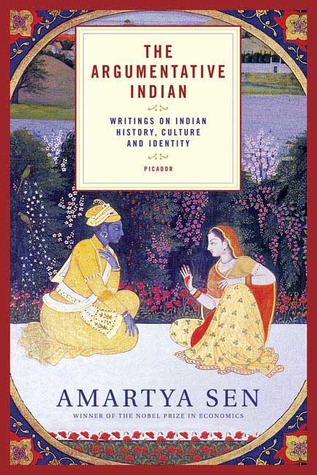
The Argumentative Indian

 Argumentative Indian

Penguin, 2005.

The Argumentative Indian is a great read for those interested in a more critical and deeper look at modern India.  Amartya Sen is a Nobel Prize winner in Economics in 1998 and a professor at Harvard.  His writing is obviously enlightened, but he writes with a passion for his home country that is directed at important contemporary issues.

The book consists of 16 different essays written by Sen over several years.  The essays range in topic from defining and defending Indian secularism, taking a critical look at the Hindutva movement, examining the Indian diaspora, and discussing gender challenges in modern India.  After reading this book, you will have a great broad perspective of the most important issues that dominate much of present-day India.

Here are a few key concepts that I got from this book:

  • The unique Indian view of defining secularism as being neutral to all religions as opposed to prohibiting religious expressions in the public realm
  • A repeated call for outsiders to understand that one’s religion is more about community identity than personal religious beliefs. #IndiasNotIndia
  • A celebration of India’s historic rulers, particularly Akbar.  Akbar comes up several times in the book, especially for his attempts at treating all religions equally and creating a religiously neutral government.
  • The deep historical contributions made by early Indian scientists which were far in advance of their western counterparts (like Aryabhata)
  • Sen’s interpretation of the #ThinSkinned Indian as being put down by ignorant English writers and bureaucrats.  He says that India was driven to settle on “spirituality” as an area of authority because they were told their achievements in other realms were largely inconsequential. (Sen is a thorough secularist and atheist if you couldn’t guess.)

Sen, who himself is a Bengali, dedicates one essay each to two of West Bengal’s most well-known creators: Rabindranath Tagore and Satyajit Ray.  Tagore is perhaps India’s most celebrated poet and the author of the Indian national anthem.  Satyajit Ray is a filmmaker whose films still carry a lot of power and influence.  Anyone interacting with Bengalis would benefit from these short introductions to two incredible men.

The Argumentative India probably should not be the very first book you read about India, but it is well worth the time.  Slightly academic, but very practical, this book will help you dig deeper in your understanding of India.

Who would like it: People with a basic understanding and experience with India.


Buy the Argumentative Indian on  Amazon.in, Amazon.com, or Kindle

Share this:

  • Click to email a link to a friend (Opens in new window) Email
  • Click to share on X (Opens in new window) X
  • Click to share on LinkedIn (Opens in new window) LinkedIn
  • Click to share on Facebook (Opens in new window) Facebook

Like this:

Like Loading...
  • « Previous Page
  • 1
  • 2
  • 3

Get a FREE copy of How to Avoid Dying in India + new articles!

0 happy subscribers

Trending Posts

  • Popular
  • Latest
  • Today Week Month All
  • Indias By Region Indias By Region
  • Indian Naming Conventions Indian Naming Conventions
  • The Best of Mark Twain on India The Best of Mark Twain on India
  • Filling Out Your Online Indian Visa Application Filling Out Your Online Indian Visa Application
  • Indias By Class: Economic Diversity of India Indias By Class: Economic Diversity of India
  • What To Do If You Are In A Car Accident in India What To Do If You Are In A Car Accident in India
  • 10 Ways to Create an Ego-Friendly Workplace 10 Ways to Create an Ego-Friendly Workplace
  • How to Develop Leaders in India How to Develop Leaders in India
  • What Kind of Leader Are You Developing? What Kind of Leader Are You Developing?
  • Is India Safe? Is India Safe?
Ajax spinner
%d