Learning India

Making sense of the subcontinent

  • Start Here
    • 8 Common Causes of Death in India
      • #ChaosBeatsLogic
      • #CustomerisAlwaysThere
      • #GreyIsWhite
      • #IndiasNotIndia
      • #PowerPlays
      • #See1See100
      • #ThinSkinned
      • #TimeIsEternal
    • Circles of Obligation
  • Daily Living
    • Cultural Adaptation
    • Be Prepared
    • Transportation
  • Into India
    • Indias By…
    • Politics
    • Hinduism
    • Book Reviews
    • Movie Reviews
    • Mark Twain on India
  • On The Job
    • Parent Leadership
    • Communication
    • Team Management
  • Podcasts
  • References
    • People You Should Know
    • Indian English Dictionary and Indianisms
    • Common Indian Acronyms
    • Indian Name Decoder
  • About

Neil Miller April 2, 2014 Filed Under: Cultural Adaptation

Put Your Value Ranking Skills to Work!

Value ranking applied js42

Let’s review what we’ve learned about value rankings:

  1. Values are ideals we align ourselves to, not behaviors we practice
  2. All values are good
  3. All values are ranked
  4. Value ranking determines decisions and behaviors

All this is great theory, but how does it actually help you? It’s nice to analyze a situation, but what if you are right in the middle of it?

Let’s walk through a step-by-step process with two examples: one from professional life and one from personal life.
[Read more…]

Share this:

  • Click to email a link to a friend (Opens in new window) Email
  • Click to share on X (Opens in new window) X
  • Click to share on LinkedIn (Opens in new window) LinkedIn
  • Click to share on Facebook (Opens in new window) Facebook

Like this:

Like Loading...

Neil Miller March 31, 2014 Filed Under: #GreyIsWhite, Cultural Adaptation

Value Rankings, #GreyIsWhite, and Anne Frank

Value Ranking Anne Frank

Is this moral dilemma familiar to you?

You are a simple citizen living in Nazi Germany, and you are hiding some Jews in your home. The SS comes to your house, and asks if you are housing any Jews. What do you say?

The dilemma, of course, is that if you say “no”, you are lying, and everyone knows that lying is wrong. However, your hideaways are safe.

If you say “yes”, you can pat yourself on the back for upholding honesty, and then watch the troops escort the Jews out of your house to their fate.

We struggle to find the best way out of this situation. How can you maintain the value of honesty while allowing people to walk to their doom? In my culture, our best response to this dilemma was usually answering honestly, and then hoping the Jewish families would miraculously not be found. Pretty lame, looking back on it.

The interesting thing is that this is only a dilemma for some people. It perplexes universalists and people who don’t accept that value ranking is a natural part of how we behave. Everyone else is trying to figure out where the actual dilemma is. [Read more…]

Share this:

  • Click to email a link to a friend (Opens in new window) Email
  • Click to share on X (Opens in new window) X
  • Click to share on LinkedIn (Opens in new window) LinkedIn
  • Click to share on Facebook (Opens in new window) Facebook

Like this:

Like Loading...

Neil Miller March 28, 2014 Filed Under: Cultural Adaptation

Why Indians Think Americans Don’t Value Family

Value ranking matthew Hurst

Two quick stories to start.

Story #1: An expat in India was having trouble implementing a new sales process. She was trying to get the sales team to input their data into a CRM system that was supposed to greatly scale the ability of the team. The team kept saying they understood the system, but rarely used it and often neglected it entirely.

She said, “Why is it that Indians don’t value processes?”

Story #2: I was explaining certain parts of American culture to a group of young Indians. I talked about how it is (or was) uncommon for young people to live with their parents after they graduate college. Most will move out at least by the time they reach 25. I told them that parents encourage this, and that I even knew some parents who began charging rent to their adult children who stayed in their home.

The group was shocked at this and said, “Why don’t Americans value family?”

Something about these two questions seemed wrong to me. Is it true that Indians don’t value processes? Would any Indian ever stand up and say that? Would any American stand up and say they do not value family?

Not likely. Something else is clearly going on…


What you probably already knew, but never said, about values:

[Read more…]

Share this:

  • Click to email a link to a friend (Opens in new window) Email
  • Click to share on X (Opens in new window) X
  • Click to share on LinkedIn (Opens in new window) LinkedIn
  • Click to share on Facebook (Opens in new window) Facebook

Like this:

Like Loading...

Neil Miller March 26, 2014 Filed Under: #GreyIsWhite, Communication

One Tip to become Indispensable in Cultural Communication

indirect communication

What is one communication skill that will instantly make you more valuable to over 3 billion people?

In our discussion of communication, we’ve seen that directness of communication can be related more to the delicacy of the relationship than the situation, we tend to judge others based on our own Communication Comfort Zone, and we can all find ways to expand our Comfort Zone.

What I’m going to propose next goes against nearly everything taught about cultural communication for years: learn to be more indirect.

Indirect communication gets a bad rap for being subversive, weak, hiding, lying, etc. If you’ve ever sat through an intercultural communication course, the following assumptions are painfully obvious:

  • Direct communication (Western version) is superior to indirect (Asian).
  • We need to fix people who speak indirectly.
  • You should be ashamed of yourself if you don’t say exactly what you mean all the time.
  • We would all be better off if everyone spoke more directly (Western version).


Why is that? Because these courses are sponsored, created, enjoyed, taught, and demanded by those who are more direct in their communication.

What if we rejected all those assumptions? What if instead of seeing indirect communication as a professional flaw, we hailed it as an advanced communication skill? What if instead of trying to fix other people, we actually learned something from them instead?


Sound interesting to you?


14 Reasons You Should Learn to Speak and Interpret Indirectly

[Read more…]

Share this:

  • Click to email a link to a friend (Opens in new window) Email
  • Click to share on X (Opens in new window) X
  • Click to share on LinkedIn (Opens in new window) LinkedIn
  • Click to share on Facebook (Opens in new window) Facebook

Like this:

Like Loading...

Neil Miller March 24, 2014 Filed Under: #GreyIsWhite, #PowerPlays, Politics

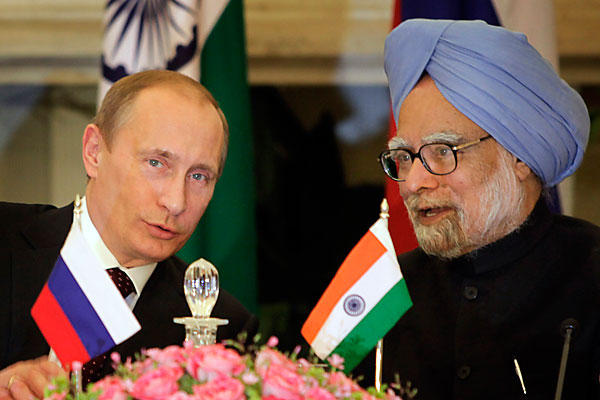
Why India Supports Russia’s Move Into Ukraine

india-russia-ties

India recently announced that it does not support the West’s sanctions against Russia for its actions in Ukraine. While not completely aligning with Russia, India has been the first major nation to offer any public support. 

It might sound surprising given that India usually comes out with a very neutral stance on these kinds of issues, and often in favor of the US/European position.

It might also sound surprising given that India’s most sensitive border issue is with Kashmir.

Traditional ethics might cause India to come to this logical conclusion:

  1. We have a small area of our country that is ethnically and linguistically similar to a neighbor who can be hostile (Pakistan).
  2. We do not want Pakistan to come and steal Kashmir from us.
  3. Therefore we will not support Russia’s advances into Ukraine in case the same happens to us.


However, in India, relational ethics (not situational or logical ethics) prevail in all circumstances. It’s not what is involved, but who.

[Read more…]

Share this:

  • Click to email a link to a friend (Opens in new window) Email
  • Click to share on X (Opens in new window) X
  • Click to share on LinkedIn (Opens in new window) LinkedIn
  • Click to share on Facebook (Opens in new window) Facebook

Like this:

Like Loading...

Neil Miller March 21, 2014 Filed Under: #PowerPlays, Into India, Politics

Whoever I Hit Will Become a King!

Vijayakanth_0


With election time coming near in India, I wanted to share one of my all-time favorite stories about power and politics.

In 2011, one of the local party leaders in Tamil Nadu was on the campaign trail, meaning that he was driving around a large van and speaking to crowds using a public address system. All of a sudden, the microphone stops working. The leader then yells at one of his own party candidates, and proceeds to beat him over the head with the microphone.

In certain countries, that is the end of your political career. Not in India.


The #PowerPlays guide to overcoming an embarrassing PR event:

[Read more…]

Share this:

  • Click to email a link to a friend (Opens in new window) Email
  • Click to share on X (Opens in new window) X
  • Click to share on LinkedIn (Opens in new window) LinkedIn
  • Click to share on Facebook (Opens in new window) Facebook

Like this:

Like Loading...

Neil Miller March 19, 2014 Filed Under: Mark Twain

Mark Twain on India: The Indian Crow

Following the Equator


Continuing this series with an excerpt from Mark Twain’s Following the Equator. This humorous passage looks at the under-celebrated and under-demonized Indian crow. Judging by this account, the crow hasn’t changed much in the last 100 years.

This passage picks up after Twain recounts a tumultuous night’s sleep only to be awoken by the crows.

[Taken from The Complete Works of Mark Twain: Following the Equator, Volume 2, Harper and Brothers: New York, 1925.]


“…it all broke loose again. And who re-started it? The Bird of Birds the Indian crow. [Read more…]

Share this:

  • Click to email a link to a friend (Opens in new window) Email
  • Click to share on X (Opens in new window) X
  • Click to share on LinkedIn (Opens in new window) LinkedIn
  • Click to share on Facebook (Opens in new window) Facebook

Like this:

Like Loading...

Neil Miller March 17, 2014 Filed Under: #TimeIsEternal, Mark Twain

Mark Twain on Why Hindus don’t accept foreign gods

Mark Twain India Following the Equator

Click here for all of the Mark Twain Selections on India.


“India is, the cradle of the human race, the birthplace of human speech, the mother of history, the grandmother of legend, and the great grand mother of tradition. Our most valuable and most instructive materials in the history of man are treasured up in India only.” Mark Twain


As I researched India, I would occasionally come across nice quotes like this one from Mark Twain. I love reading Twain, but could not figure out in which book he gave all these quotes.

I finally discovered “Following the Equator”, which is his journal from a speaking tour he did around the world in 1897.

This week, I’ll post a few excerpts from his book that I particularly liked. Later, I’ll give a full review for anyone interested.

The first excerpt is a story told to Twain on a boat by a missionary to India about some of the challenges he faced. While the missionary’s context is a religious one, I think anyone can find a good application.  

I hope you enjoy it! NM


[Taken from The Complete Works of Mark Twain: Following the Equator, Volume 2, Harper and Brothers: New York, 1925.]


“At home, people wonder why Christianity does not make faster progress in India. They hear that the Indians believe easily, and that they have a natural trust in miracles and give them a hospitable reception. Then they argue like this: since the Indian believes easily, place Christianity before them and they must believe; confirm its truths by the biblical miracles, and they will no longer doubt. The natural deduction is, that as Christianity makes but indifferent progress in India, the fault is with us: we are not fortunate in presenting the doctrines and the miracles.

[Read more…]

Share this:

  • Click to email a link to a friend (Opens in new window) Email
  • Click to share on X (Opens in new window) X
  • Click to share on LinkedIn (Opens in new window) LinkedIn
  • Click to share on Facebook (Opens in new window) Facebook

Like this:

Like Loading...
  • « Previous Page
  • 1
  • …
  • 12
  • 13
  • 14
  • 15
  • 16
  • …
  • 20
  • Next Page »

Get a FREE copy of How to Avoid Dying in India + new articles!

0 happy subscribers

Trending Posts

  • Popular
  • Latest
  • Today Week Month All
  • Indias By Region Indias By Region
  • The Best of Mark Twain on India The Best of Mark Twain on India
  • Indian Naming Conventions Indian Naming Conventions
  • Indias By Class: Economic Diversity of India Indias By Class: Economic Diversity of India
  • Filling Out Your Online Indian Visa Application Filling Out Your Online Indian Visa Application
  • What To Do If You Are In A Car Accident in India What To Do If You Are In A Car Accident in India
  • 10 Ways to Create an Ego-Friendly Workplace 10 Ways to Create an Ego-Friendly Workplace
  • How to Develop Leaders in India How to Develop Leaders in India
  • What Kind of Leader Are You Developing? What Kind of Leader Are You Developing?
  • Is India Safe? Is India Safe?
Ajax spinner
%d